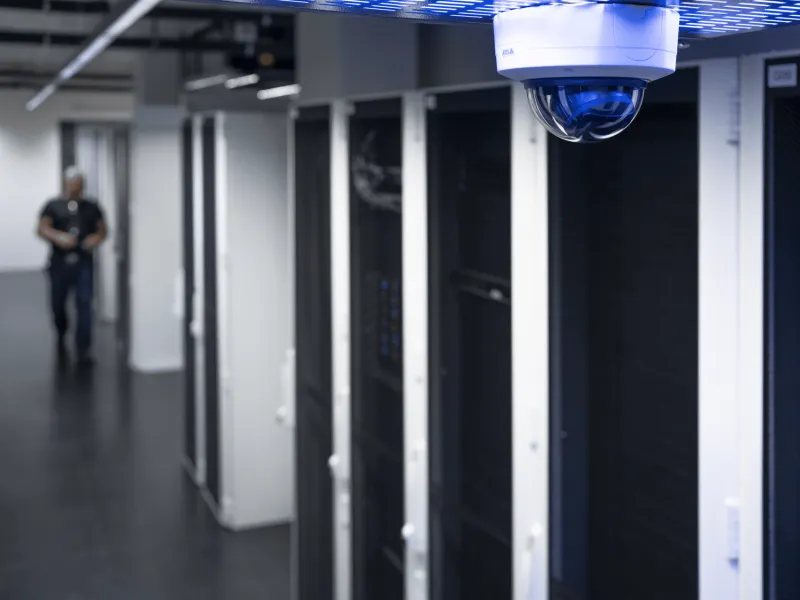
See how an integrated approach can help data center teams strengthen physical security,
improve situational awareness and respond faster in real-world environments.
Siloed systems, delayed response, and blind spots can turn small issues into costly disruptions.

By the time a hotspot is visible,
the risk may already be growing.

Security gaps at the edge can quickly
become an operational risk.

Disconnected systems make it harder
to see, decide, and respond.

Catch the hotspot before it becomes an outage.

Know who's at the fence, the door, and the cage — in real time.

One view across every site. One decision path when it matters.


Explore the key risks facing modern data centers and practical ways to improve protection, uptime, and operational visibility.
For data center operators, security leaders, and architects.
Explore thought leadership, interviews, and practical perspectives on how integrated video, access control, audio, and analytics can help data center teams improve visibility, response, safety, and resilience.
Explore answers to frequently asked questions about data centre security, safety and operational challenges, with practical insights from industry experts.
Almost always at the exception, not the technology. Temporary elevated access granted for a maintenance window and never revoked, or senior staff bypassing protocols because they are trusted. These become the gaps that create real risk.
The answer is not just better hardware. It is tying access events to approved work orders, automating permission reviews, and treating exception management with the same rigour as the physical barriers themselves.
The industry is moving in that direction and for good reason. When a cyber alert and a physical access event happen within minutes of each other, the team that sees both in the same view responds faster and more accurately.
The practical path is to start by sharing alerts between your cyber and physical SOC teams, then align workflows before merging the functions.
It depends on the use case. Tailgating detection, access anomaly alerts, and hotspot identification are delivering real value today. They address the structured, rule-bound nature of a data centre environment well.
Broad behavioural analytics retrofitted from retail or public spaces? Less so. The most reliable applications are those that enforce existing rules more consistently, not those that introduce open-ended inference into a controlled environment.
Increasingly, yes. Beyond physical intrusion, drones are being used for reconnaissance and network probing.
Most APAC jurisdictions restrict active countermeasures, so the realistic response is detection and escalation but not neutralisation. Layering RF detection with radar and integrating alerts into your security platform gives operators visibility and a coordinated response path before an incident escalates.
Download the eBookTechnology handles volume reliably. Guards handle context. A cloned credential or a legitimate badge used by the wrong person passes through a turnstile just as easily as it passes a distracted officer.
The guard's value is recognising when something is wrong even when the credential is valid. The more effective model is to redesign the role around exception handling — let the system process routine access, and have the officer respond to what the system flags.
The 4 most common are: complete audit trails retained for 12 to 24 months, the right to conduct third-party physical security audits, documented proof of zone segregation, and defined incident response SLAs for physical events.
Meeting these consistently across a multi-site estate requires your access control and security management systems to work as one — not as separate tools.
Both as they serve different functions. Radar covers large perimeters in all weather and provides accurate location data, but cannot tell you what it has detected.
Thermal cameras verify the alarm in low light and adverse conditions where optical cameras fail.
The recommended is radar to detect, thermal to verify, and PTZ to document. All to be integrated as one.
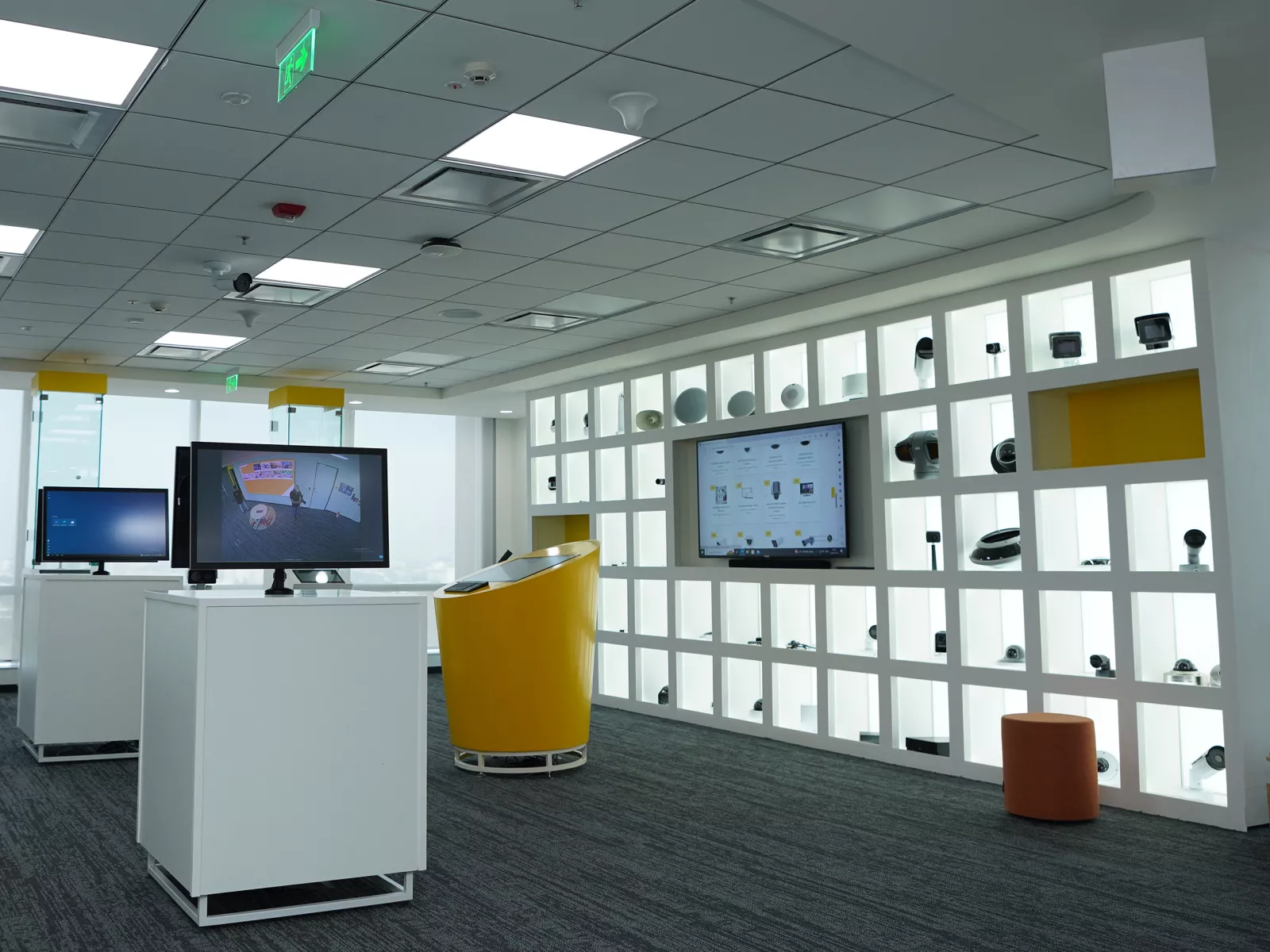
Book an AEC visit to see it in actionSee solutions in action, explore real deployments, join events, and understand the priorities shaping today's data center operations.


Speak with Axis about your operational challenges and the risks most important to your site.